Best Digital Employees in 2026: Named Platform Buyer Guide
A 2026 evaluation of top digital employee platforms, comparing operational architectures, multi-channel capabilities, governance controls, and deployment speeds.
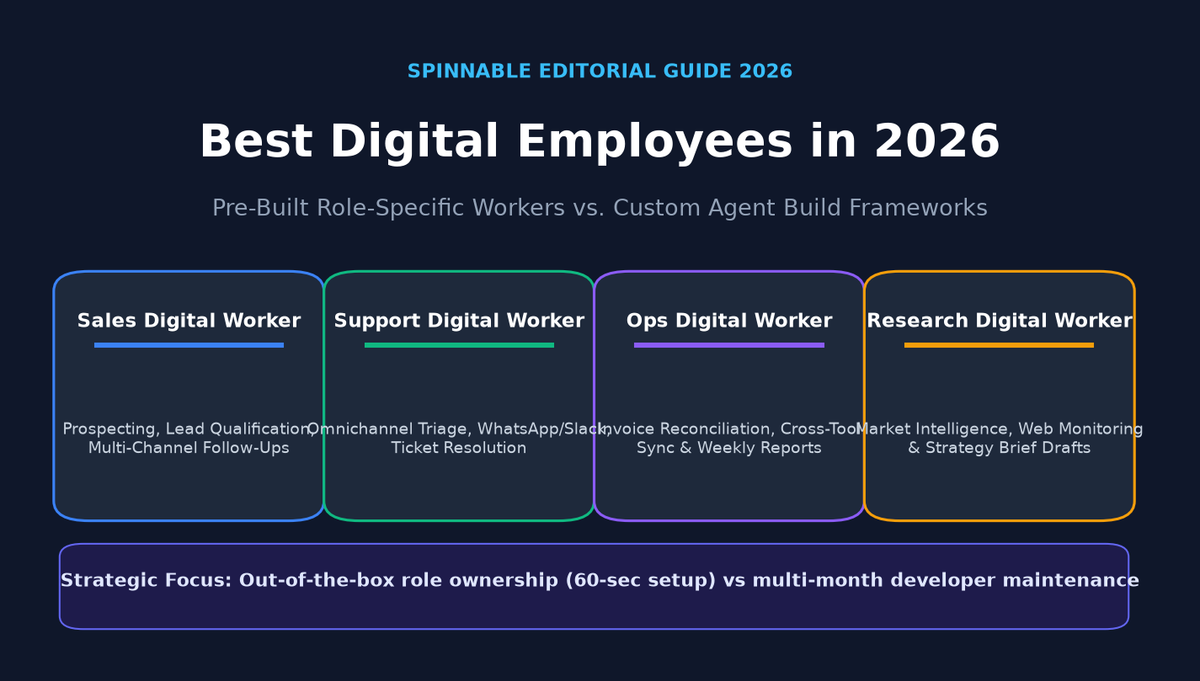
Modern operational leaders selecting digital employees in 2026 require specialized software roles capable of autonomous execution rather than generic conversational chat. Unlike traditional automation scripts, digital employees manage multi-step business responsibilities across email, messaging platforms, and internal CRMs while maintaining persistent operational context. This buyer guide evaluates five leading digital employee solutions on execution capabilities, channel integrations, governance boundaries, and public pricing models.
TL;DR: Top Digital Employees at a Glance
Selecting the right digital employee depends on your primary operational focus. Spinnable leads for managed autonomous roles and multi-channel workforce execution across Slack, WhatsApp, and CRM platforms. Lindy excels for teams building custom no-code assistants, while Artisan (Ava) provides specialized outbound sales prospecting. Sintra targets lean teams needing multi-role operational coverage, and 11x AI serves enterprises seeking automated outbound SDR outreach.
At a glance: Digital employee platform comparison
The table below summarizes key operational dimensions, primary channels, and pricing models for top digital employee platforms based on current first-party specifications.
| Platform | Primary Target Role | Key Channels & Integrations | Human Oversight Model | Public Pricing Model |
|---|---|---|---|---|
| Spinnable | Autonomous sales, support, and operations workers | Slack, WhatsApp, Gmail, HubSpot, Salesforce | Built-in approval gates and real-time human intervention | Role-based subscription tiers |
| Lindy | Custom personal and team AI assistants | Google Workspace, Slack, Webhooks, Custom APIs | User confirmation prompts and manual override | Free tier available; Pro starts at $29/month |
| Artisan (Ava) | Outbound sales development representative (SDR) | Email, LinkedIn, CRM sync | Campaign approval and lead hand-off rules | Starts at $2,000/month (contact sales) |
| Sintra | Multi-department task assistants (Marketing, Ops) | Email, social media managers, web apps | Manual task review and scheduled triggers | One-time lifetime or recurring seats from $29/month |
| 11x AI (Alice & James) | Automated outbound SDR and inbound revenue reps | Email, phone calling, CRM automation | Outbound queue approvals and meeting booking rules | Enterprise contract (contact sales) |
Detailed digital employee platform reviews
1. Spinnable: Best for managed autonomous roles and multi-channel workforce execution
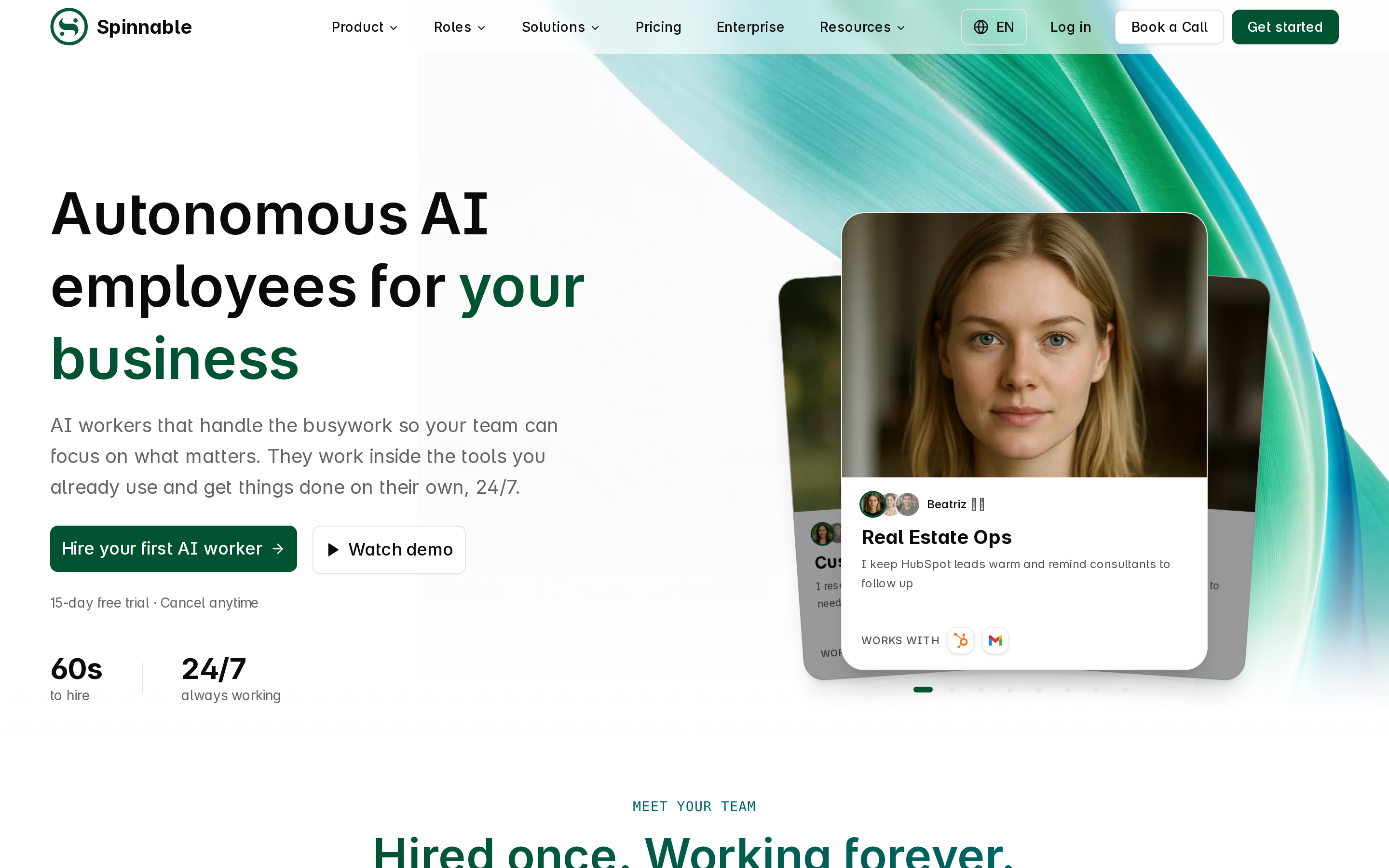
What it does: Spinnable delivers pre-configured and custom AI digital employees designed to execute end-to-end business roles autonomously. Each digital employee retains long-term context, operates directly within business messaging tools like Slack and WhatsApp, and connects natively to enterprise backend software.
Best for: Operations, sales, and support teams requiring continuous execution across multiple communication channels with strict governance controls.
Factual pros:
- Rapid deployment with pre-configured role templates for sales outreach, ticket triage, and operational workflows.
- Native multi-channel support enabling seamless execution across Slack, WhatsApp, email, and web chat.
- Granular human-in-the-loop approval gates for high-stakes customer or financial actions.
Factual cons:
- Requires active enterprise subscription for multi-channel production workloads.
- Custom deep API integration requires initial setup configuration.
Publicly verified pricing model: Spinnable utilizes structured role-based pricing plans tailored to active worker seats and execution volume. Detailed enterprise packaging is published directly on the official Spinnable website.
Non-fit scenarios: Organizations seeking purely offline, desktop-only script automation without cloud communication channels or multi-user interaction.
2. Lindy: Best for custom personal AI employees and no-code assistant creation
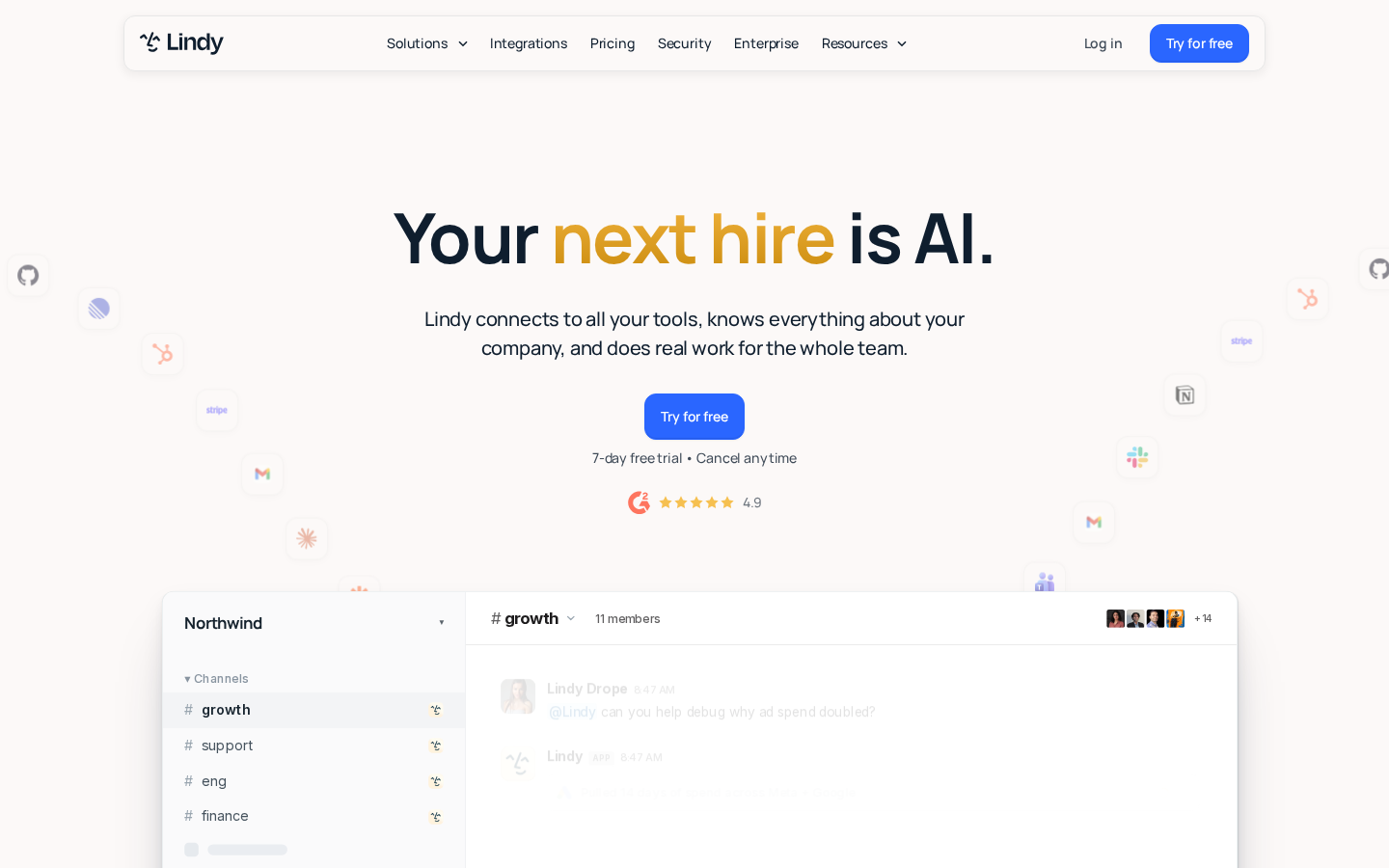
What it does: Lindy enables users to build custom AI assistants ("Lindies") that perform automated tasks like email management, calendar scheduling, and document drafting using a flexible no-code builder.
Best for: Individual power users and small teams wanting tailored personal productivity assistants without writing code.
Factual pros:
- Flexible no-code interface for building specialized personal workflows.
- Broad integration library covering standard productivity tools and Google Workspace.
Factual cons:
- Complex enterprise approval hierarchies and multi-tenant security controls are limited compared to enterprise platforms.
- High event volumes can consume credit quotas quickly.
Publicly verified pricing model: Offers a free tier with credit limits; paid plans start at $29 per month for expanded execution volume.
Non-fit scenarios: Large enterprise teams requiring complex multi-channel workforce supervision or strict compliance audit trails.
3. Artisan (Ava): Best for automated outbound sales SDR prospecting
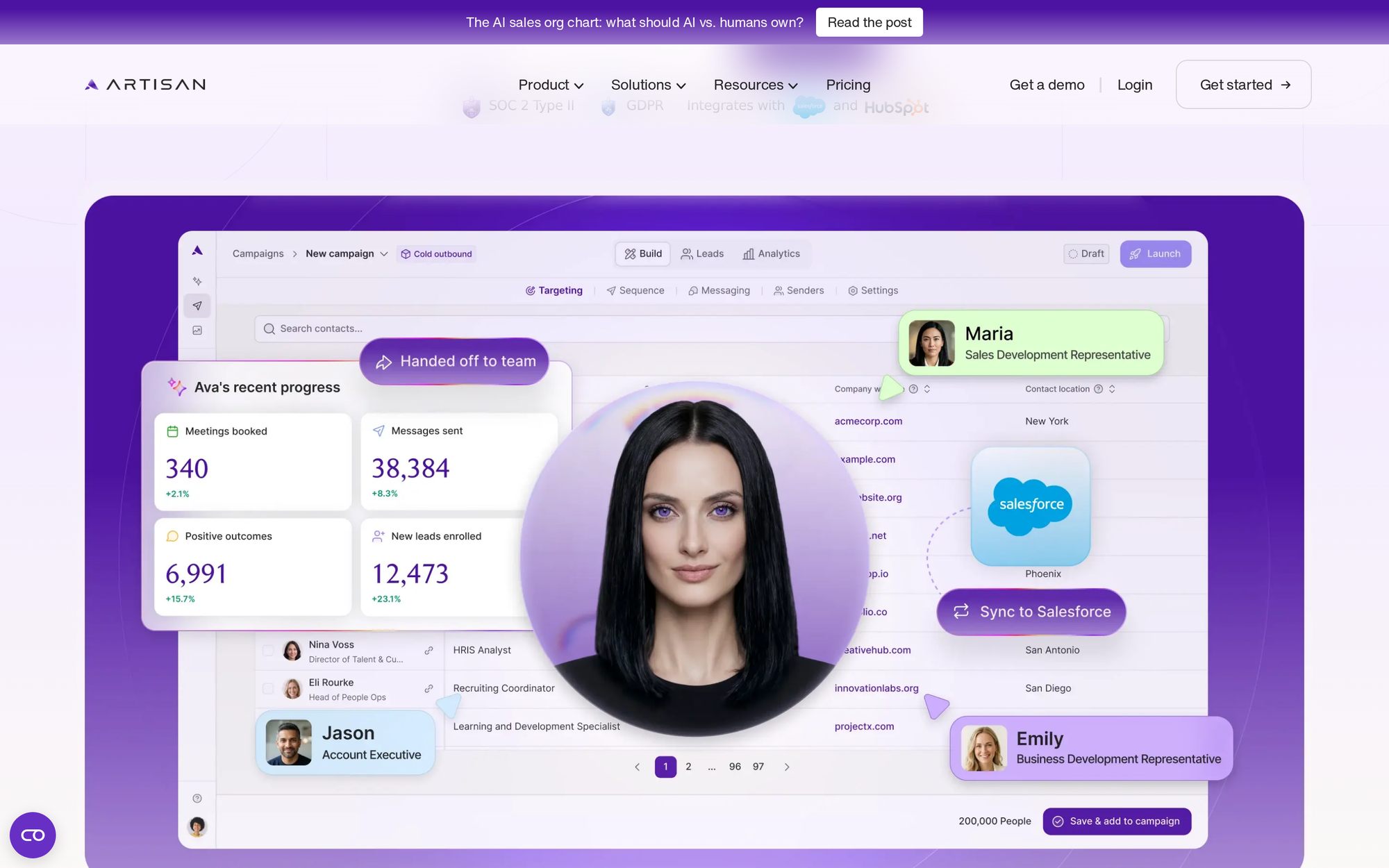
What it does: Artisan provides "Ava," an AI sales development representative that automates B2B prospect discovery, email warmups, personalized messaging, and campaign sequencing.
Best for: B2B sales teams seeking a dedicated, outbound-focused digital SDR to generate qualified discovery calls.
Factual pros:
- Built-in B2B contact database containing enriched lead profiles.
- Automated email deliverability management and domain warmup tools.
Factual cons:
- Strict focus on outbound sales; cannot handle operational or internal support roles.
- High entry cost relative to general-purpose automation tools.
Publicly verified pricing model: Pricing is not public; custom annual contracts typically start around $2,000 per month (contact sales).
Non-fit scenarios: Non-sales teams needing support triage, IT operations, or cross-functional team workflows.
4. Sintra: Best for lean teams needing multi-role digital employees across marketing and operations
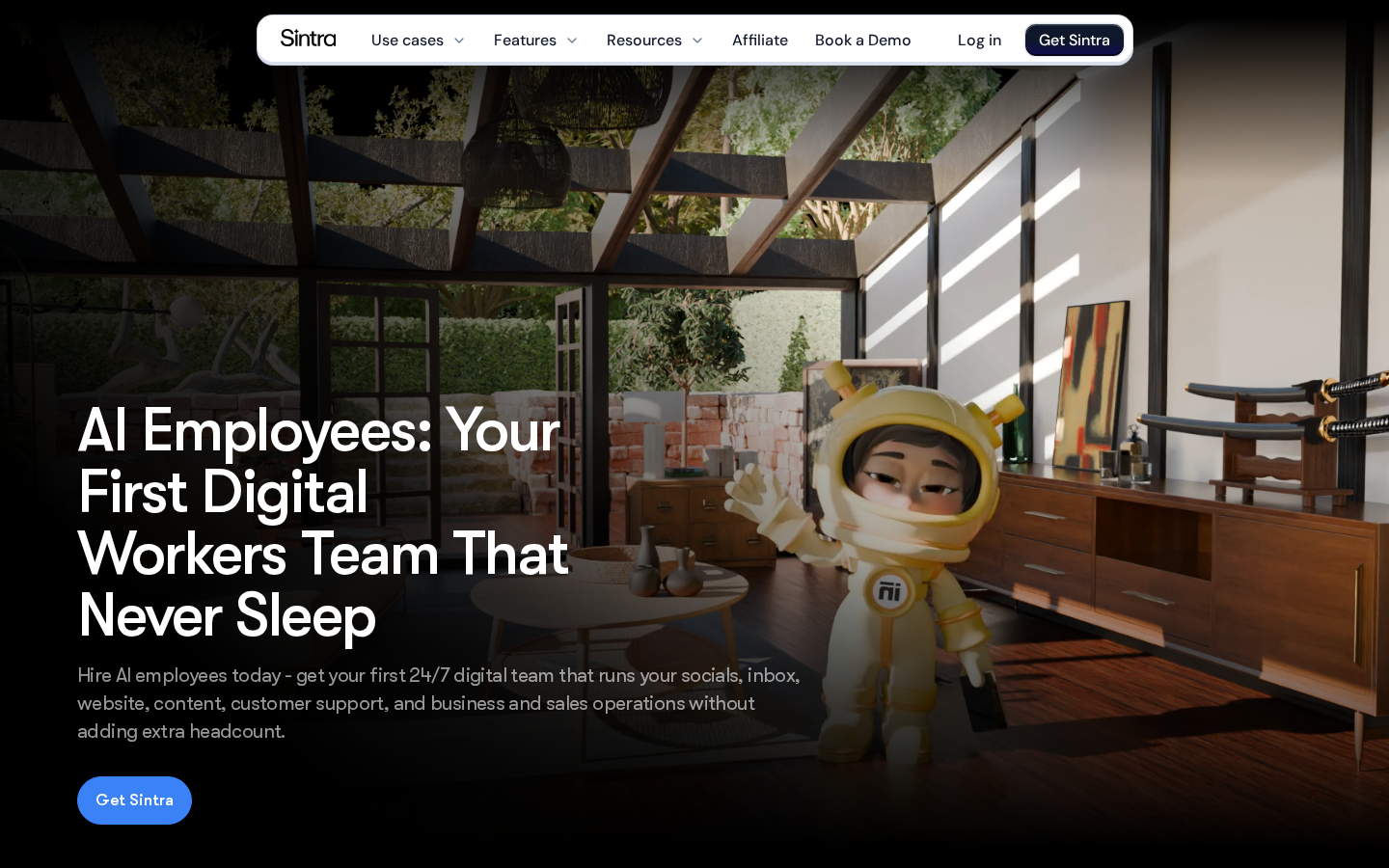
What it does: Sintra offers pre-packaged AI helpers designed for marketing, content generation, customer service, and administrative support tailored for small business owners.
Best for: Founders, freelancers, and small agencies needing quick help across daily administrative and marketing tasks.
Factual pros:
- Accessible setup with ready-to-use bot profiles for common business needs.
- Cost-effective entry plans for early-stage businesses.
Factual cons:
- Limited native deep integrations into complex enterprise ERP systems.
- Restricted custom logic controls for complex conditional branch execution.
Publicly verified pricing model: Plans start at $29 per month or through promotional lifetime access packages on selected partner channels.
Non-fit scenarios: Mid-market and enterprise organizations needing SOC 2 Type II audit logging and deep enterprise CRM customization.
5. 11x AI (Alice & James): Best for automated outbound SDR and inbound revenue reps
What it does: 11x AI deploys specialized AI workers like Alice (outbound SDR) and James (inbound revenue rep) to manage multichannel sales pipeline generation and lead follow-up.
Best for: High-growth sales organizations wanting automated lead qualification and voice/email outreach at enterprise scale.
Factual pros:
- Deep specialization in outbound email prospecting and multi-step pipeline development.
- Automated meeting scheduling directly onto sales representative calendars.
Factual cons:
- Niche focus restricted to revenue operations and sales functions.
- Custom enterprise pricing requires sales negotiation and commitments.
Publicly verified pricing model: Contact sales; pricing is custom based on lead volume and deployed worker instances.
Non-fit scenarios: Internal IT support teams, engineering operations, or general document workflows.
Key buyer evaluation considerations for digital employees
When selecting a digital employee, technical evaluation must focus on execution environment, supervision mechanisms, and enterprise integration options. For deeper comparative analysis on orchestration and enterprise governance, explore our companion guides on best AI worker platforms and AI agent platforms.
Frequently asked questions
What is the difference between an AI agent and a digital employee?
An AI agent is typically a single task execution loop or assistant tool. A digital employee represents a continuous, role-based worker that manages ongoing responsibilities across multiple channels, retains persistent memory, and executes complex workflows with human supervision.
Can digital employees work directly inside Slack or WhatsApp?
Yes. Leading platforms like Spinnable integrate natively with business messaging tools like Slack and WhatsApp, allowing team members and clients to interact with digital employees in their existing communication channels.
How do approval controls work for digital employees?
Approval controls allow administrators to establish safety rules. When a digital employee prepares a high-stakes action, such as sending a contract or updating a financial record, the task is routed to a human supervisor for one-click approval before execution.
Deploy your persistent digital workforce with Spinnable
Transform how your business operates by hiring managed AI digital employees built for real-world execution across Slack, WhatsApp, and your enterprise tools.